Tampilkan postingan dengan label bill. Tampilkan semua postingan

S45 Rigging Bill of Material from John Fisher

| 0 komentar |
Building Displaying Sailing
Model Boats and Ships
S45 sail boat Rigging Bill of Material from John Fisher
To:Star45@yahoogroups.com
From: J Fisherjfisher@wildblue.net
Sender: Star45@yahoogroups.com
Date: Wed, 3 Jan 2007 21:02:38 -0700 (Mountain Standard Time)
Subject: Re: [Star45] Deck rigging and such

Here is the list on the star 45 yahoo groups for rigging. I am using the following for my next couple of builds:
GBMY item #, description, qty, purpose
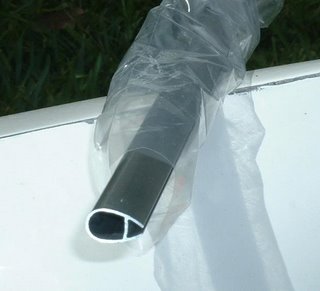
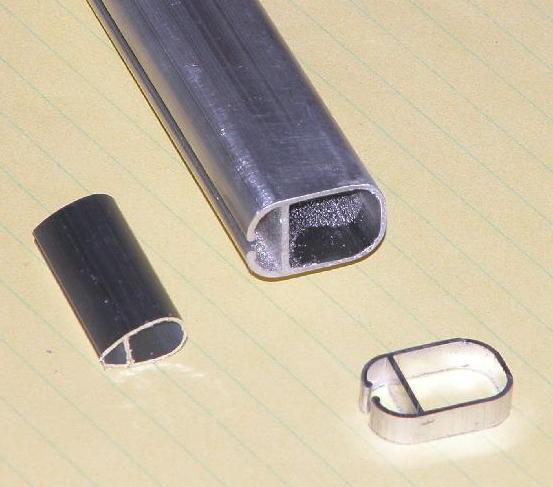
019, 3/8 alloy tube, 1, Jib boom
034, Hales single block, 2, main and jib sheets
146, tapered drain plug, 1, plug in transom
182, Z sheet hook, 2, sheet ends/boom attachment
202, large bowsie, 1, back stay/forestay with 80 lb Dacron, order small ones if using spektra
206, O-rings, 1, hold the Z hooks to the boom.
254, double block, 2, main sheet and jib sheet adjuster
255, sheet exit, 1, turning block for main sheet from under deck to above deck.
269, eye plate, 1, mounting for jib block.
272, 180 deg sheet lead, 1, turn around for jib tweaker
280, sheet hook, 1, hooks for backstay and fore stay.
282, tang, 1, attach lowers to mast.
907, rigging screw, 4 hooks, 2 packs, upper and lowers to the deck.

I also build my own chain plates, so I dont order them from GBMY. Don does carry them if you need them. I also like the Ludwig mast better than the bantock mast, so I ordered 8 foot masts cut to 69 from Larry Ludwig, the other 28 or so is the main boom. Last time I made all my own boom vang, mast fitting. This time I ordered them from Larry. You can use the bantock mast, boom, and fittings from GBMY as well. They are good stuff and I have them on my IOM.

The back stay crane is made from 1/16 (.063) aluminum that I bought at the local hobby shop.
John Fisher
---
photos courtesy of "Larry Ludwig" at www.LudwigRCYachts.com, Ludwig Mfg.
Read More..

Bill Tripps fast and beautiful boats

| 0 komentar |

Hinkley Bermuda 40

In the last two decades of the Cruising Club of America (CCA) rating rule, William H. Tripp Jr. designed  fast, beautiful and innovative sailing yachts. He became known for winning and weatherly centrerboard yawls like the Block Island 40, the Bermuda 40 and the Mercer 44. Many sailors and yacht designers consider them some of the most beautiful boats ever built in fiberglass. They continue to captivate sailors and command high prices in the used boat market today.

Mercer 44

"The Mercer 44, arguably one of the best-looking stock boats ever built," wrote Seattle yacht designer Bob Perry. "You can still find Mercer 44s cruising and racing today. They are a marvel of balanced proportions and look as good today as they did in 1959."

Tripp was a self-taught designer who came up through the ranks working for other designers, including Sparkman & Stevens and Phil Rhodes.

He was a prolific designer. In addition to providing custom racing and cruising designs for many clients he designed production boats for Seafarer, Hinckley, Pearson, Columbia and others. An early advocate of fiberglass, he became known for flush-deck race boats with his distinctive gun-turret dog houses.

As a teenager in the 1960s, Bob Perry considered Tripp to be his favorite designer, along with Phillip Rhodes.

"Tripp’s boats had a very distinctive look, with proud sweeping spoon bows, bold sheer springs, long concave counters terminating in almost vertical transoms, and sexy and svelte cabin trunks," Perry wrote in the Nov./Dec. 2011 issue of Good Old Boat Magazine. "You would never mistake a Tripp design for an S&S design. They just seemed to my young eye to have a strength and boldness, kind of an in your face quality. Plus, his boats were consistent race winners."
Pearson Invicta 37

Burgoo, the Tripp-designed Pearson 37-footer, won the Bermuda race in 1964. At that time it was the smallest fiberglass boat to ever win the race.

"[I]t had all the Tripp trademark design features and it was a very sexy-looking little boat," Perry wrote. "In fact, and I could be wrong, this may be the first Tripp design to have the “gun turret” cabin trunk."

"Bill was the first to put portlights in the topsides as well as opening ports in cockpit sides to improve air circulation and communication below," said Ted Jones, who worked with Tripp before becoming a boating magazine editor. "He popularized flush decks on small boats (Galaxy, Medalist, Invicta, Mercer 44), and set high standards in hull and rigging scantlings that have been proven over time. He designed boats to stay together under the most difficult circumstances. I cannot recall one of his designs ever being dismasted or suffering structural damage at sea."

By the mid-1960s, Columbia, Americas leading builder of fiberglass yachts at the time, approached Tripp to design a fifty footer. He produced the first of the Columbia bubble-topped high-sided boats that are still easily recognizable. In the next six years, he produced thirteen Columbias, including the Columbia 26 MkII, Columbia 34, Columbia 39, Columbia 43, Columbia 45, Columbia 50, and the Columbia 57. The boats are vintage Tripp, but with fin keels and spade rudders.

The C-50 attracted a strong following that still has an active owners association.
Columbia 50

"The Columbia 50 was a big elegant-looking boat with the same bubble house and long flush deck (of many other Tripp designs)," Perry wrote. "It was a very good-looking boat and it was fast. Seattle’s racing scene was dominated for years by a Columbia 50 called Six Pack while the smallest class was dominated by a Columbia 26 called Miller’s High Life."


In 1969, Columbia was the worlds largest fiberglass sailboat manufacturer and Tripp designed a 57 footer named Concerto, which became the largest production fiberglass boat. It displayed several of Tripps trademark features: an unusually-long and effective waterline, high-aspect ratio sail plan, dual-surface steering system with a keel-mounted trim tab as well as a balanced spade rudder aft. Speed was derived partially from an absolute minimum of wetted surface area, and from the high prismatic coefficient hull design.

In 1971, the racing community adopted the International Offshore Rule (IOR), effectively making every CCA yacht obsolete. Tripp fought hard against the change, but designed a 52-foot IOR boat for Columbia and was looking forward to developing more of his ideas on the new rule. A few months later, a drunk driver lost control of his car, hurtled over the divider on the Connecticut Turnpike and smashed into Tripps Jaguar, killing him instantly. He was 51.

While we usually focus on just one design, I wanted to look closer at a designer first, then at one of his designs in more depth. Stay tuned.
Read More..