Tampilkan postingan dengan label is. Tampilkan semua postingan

This blog is being moved

| 0 komentar |
This blog is being transferred to my own website. All the posts have already been copied over ...

http://www.storerboatplans.com/wp

There is a good search function on the top right of that page.

For discussion, podcasts and more on boat design, boat plans, boat building, boat repair, plywood, epoxy, amateur built boats, sailing boats, canoes, kayaks, rowboats, yachts and more.

Best wishes
Michael

for General information
FORUM NEWS / BLOG VIDEOS PLANS
SIMPLEST BOAT BUILDING HELP PODCASTS PAST PROJECTS

Order Plans Online - OZ/NZ
Order Plans Online - USA
Order Plans Online - UK
Order Plans - Africa
Order Plans - Hungary

BOAT PLANS LIST
Canoes, Sailing Canoe, Sailing Skiff, Rowboat, Motorboats, Fishing Boats, Canoe Sailing rigs, Outriggers, Riverboats, Canal Boats, Punt

FAQ - Useful info
Epoxy and Methods
Saving Money
Design
Boat Building methods,

FREE PLANS

DESIGN PROJECTS
Solarboat - Mundoo 3
Norwalk Island Sharpies
Custom Keels & Foils
Custom Rigs & Sailplans
Balsa Strip Canoe 12lbs/5.5kg
Fenwick Williams Catboat
Steam powered strip canoe
Solar powered Cruiser

BOATBUILDING CLASSES
Adelaide Australia - 12 days
April and October

LINKS PAGE

ORDERING PLANS and Prices
plans Agents

Magyar nyelv? oldal
? ?????????
? ?????
Deutsche willkommene Seite
Page daccueil française
Pagina di benvenuto italiana
Página de recibimiento española
??????? ???????????
????????? ???????????

Site Map
Read More..

Star45 What is a hull Daves construction categories unofficial

| 0 komentar |
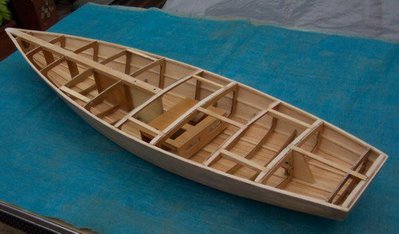
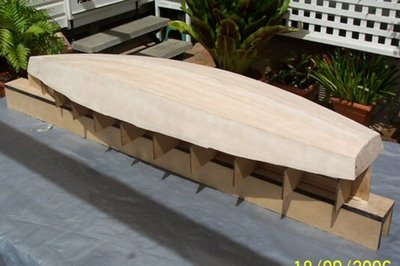
Model Sail Boat Building, How To Build A Wooden Star45 R/C Sailing Model: What is a hull ? and construction categories
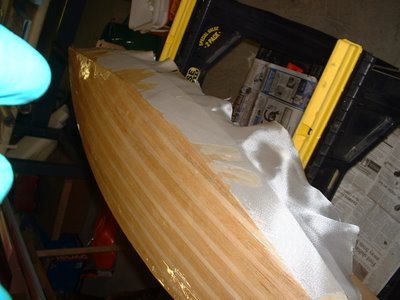
A composite hull:
a hull constructed of wood and covered with reinforced plastic (cloth impregnated with resin).

OR:
a hull constructed using a laminate (sandwich) consisting of reinforced plastic (cloth impregnated with resin) on two sides of a core . Core materials may be foam or wood.
Read More..

What is a hull and construction categories

| 0 komentar |
Dave Mainwarings definitions

HULL defintion of:
The outer shell, including frames, ribs, interior bulkheads, exclusive of masts, rigging, deck and equipment.


"bare hull" defintion of:
A model boats outer shell, EXCLUDING, ribs, interior bulkheads, exclusive of masts, rigging, deck and equipment. Example. A fiberglass hull as pulled from a mold.

--

A wooden hull:
one constructed of wood (including plywood).


--
A glass hull:
one constructed of reinforced plastic (cloth impregnated with resin). Nominally referred to as a fiberglass hull.

--
A composite hull:
a hull constructed of wood and covered with reinforced plastic (cloth impregnated with resin).
OR:
a hull constructed using a laminate (sandwich) consisting of reinforced plastic (cloth impregnated with resin) on two sides of a core . Core materials may be foam or wood.
Read More..

Sacré Cinquo! – is the 505 really French

| 0 komentar |
Amazingly the 505 dinghy, still one of the most exciting performance boats in the world, is close to celebrating its 60th birthday. Is it French or British in its origins? Its a long story – but one thats worth telling in the full version.

Certainly the 505 was designed by British naval architect, John Westell, and equally certainly most of the early hulls were built by Fairey Marine at Hamble Point, but the 505 was not, in fact, the boat that John Westell originally set out to design, and it would never have seen the light of day had it not been for a group of enthusiastic French dinghy sailors.

In 1952 the IYRU announced a competition to select a two man dinghy class to be given International, and Olympic, status. The sailing trials held on a lake at Loodsdrecht in Holland were won by the Flying Dutchman, but the national sailing associations of Britain and France were not happy with the choice, arguing that the FD was too heavy and powerful a boat for crews of average size and weight, especially in the open waters around the French and UK coasts.

The objections were heard, and new trials were organised at La Baule, in France, in 1953. Among the new prototypes competing was an attractive 18 footer with a cold moulded hull. This was John Westells Coronet design, and it was the talk of the event, not just because of its revolutionary lines and good looks, but also because of its sparkling performance.

John Westells Coronet No. 1
The Coronet was an 18 foot boat with almost 200 sq. ft of sail area. It caught the eye of many of the worlds top dinghy sailors at La Baule, partly because of its beautiful cold moulded hull, relatively narrow waterline beam, and built-in buoyancy side tanks, but mostly because of its wide flaring topsides, which gave it a futuristic speedboat-like look, quite unlike any of the other boats present.

It was said afterwards that the trials were weighted in favour of the 20 ft Flying Dutchman. Only the FD had two boats present, while all the other classes were represented by a single example. This meant that the FDs could split at the start, to sail different sides of the course, while the rest of the fleet had to guess which side would pay best. It was quickly apparent that the Dutchman had only one rival. The FDs are said to have had a slight boatspeed advantage on the beat, but the Coronet, with its lighter weight, smaller genoa, and lower wetted surface was quicker to tack and accelerate, so windward honours were divided. The Coronet planed more easily and was faster downwind, however. The two Dutchman crews had the advantage of being able to team race against the rest of the fleet, and, in particular, their only real rival, the Coronet. Whether this was fair or not, the 2 FDs finished the trials with a combined total of more wins and places than any other class, but the Coronet was, by a comfortable margin, the leading individual boat, and, in fact, dominated the series convincingly.  

The Flying Dutchman once again got the nod from the IYRU committee. Westell was informed the Coronet could apply for International status once 100 examples had been built, but no further Coronets were ever built and the sole example was sold to an East African sailor.

This could have been the end of the story, but for the enthusiasm of some of Frances top dinghy sailors who recognised a good thing when they saw it.

This is said to be 505 No. 1 (probably K1).  Notice the flat topped side tanks and transom mainsheet
Soon after the trials, a group of French helmsmen from the French Caneton (Duckling) class which had been represented but seriously outclassed on the water, got together to discuss the outcome and found themselves unamimously in admiration of the looks and performance of the Coronet. The Caneton was a hotly contested development class in France, with some of the countrys best helmsmen, and relatively free rules on construction techniques and hull form. There was a general consensus that a shorter version of the Coronet could make an excellent, more restricted, one-design version of the Caneton class, so the President of the Caneton Association, Alain Cettier, approached John Westell to ask if the Coronet design could be made to fit the Caneton rule. Westell quickly produced plans for a modified Coronet, to fit the 5 metre +1% maximum overall Caneton gauge.  

The plans were accepted by a Caneton technical committee meeting at the end of 1953, and the Caneton 505 became an official French National class before a single boat had been built!

Within weeks the first 505 was under construction in a workshop at the back of a photographers studio in Paris.  The builders, Messieurs Bigoin and Labourdette, both Caneton sailors, managed to scrounge the wood and tools, but the hull turned out to be slightly too wide to go through the workshop door, so the doorframe and some masonry had to be removed before the 505 could emerge! Caneton 505 Number 1 was launched on the Seine at Meulan at Easter in 1954, and tested by several of Frances top sailors. At the end of the holiday weekend Cettier found himself with orders for 10 boats!

The original Coronet had been built by John Chamiers Tormentor yard at Warsash on the Hamble river, but Cettier found that Fairey Marine, across the river at Hamble Point, could produce the hulls cheaper and more quickly, using their hot moulding process in which the hulls were “baked” in a large autoclave oven to cure their advanced aeronautical glues.

These first bare hulls were nested together and delivered to France where they were finished by the Sampson yard at Sartrouville and by Mallard at Les Mureaux, both on the River Seine.  

Meanwhile, Fairey were turning out their own finished version of the “Five-O” for sale in Britain, as well as other bare hulls to be finished by customers or by other yards, in particular Tormentor just a few yards away across the Hamble River. By August there were enough 505s sailing to hold a Franco-British challenge regatta at Ouistreham in Normandy.

505 No 8 (France) Note the rolled tanks and cutout transom
The early French boats did not feature the characteristic rolled side tanks that we associate with the 505, but certainly some of the very earliest boats finished by Fairey had them, and in time they became a trademark feature of the class. These, and the characteristic flared topsides make the Five-O a relatively comfortable boat to sail, as there is no sharp edge to dig into the crews legs, and spray, or at least some of it, is deflected away from the boat and the crew.

The first boats had wooden masts, but the class rules allowed for all kinds of development in the areas of construction materials, interior layout, running rigging, shaping of foils, etc., and the top boats in the class on both sides of the channel were soon sporting Proctor alloy spars, open transoms, centre sheeting, and other innovations. The astonishing performance of the 505 soon brought it to the attention of sailors all over Europe and the World, so the class spread quickly as new racers took up the class, and new builders took on construction.

Notice the class burgee?  It carries both the Coronet and Caneton insignia
By 1955 with over 100 boats sailing, the 505 bcame an International class in its own right. The first fibreglass hulls started to appear in the latter part of the 1950s, initially composite boats with wooden decks, transoms and side tanks, later, builders like Lanaverre in France and Parker in Britain would produce hundreds of all-plastic boats.

Since the class rules allow all kinds of materials, provided essential hull dimension and minimum weight limits are adhered to, the 505 has always been in the forefront of construction technology. Nowadays hulls and spars are of carbon fibre, and stiff hydrodynamically profiled foils promote planing even to windward, but even with all their scarily modern equipment, the modern 505 is still recognisably the same boat as the one that Parisian photographers door had to be knocked down for in 1954.

Some bullet points:
  • Both the Coronet and 505 were designed from the start for a two man crew with a trapeze.
  • John Westell sailed the Coronet in the IYRU La Baule trials and one of the 505s in the first 505 class regatta at Ouistreham.
  • The International 505 Association burgee still carries the Coronet and Caneton insignia in recognition of the origins of the class
  • More than 9000 boats to the 505 design have now been registered
  • The magazine "Cahiers du Yachting" donated the wood for the first boat
  • Daniel Mazo was the photographer whose doorway in the Boulevard Saint-Martin had to be “modified”
  • The 505 is known in France as the “Cinquo”
  • The first 505 originally carried the Caneton sail insignia with the class number 1701
  • The topsides flare from 1.24m beam at the waterline to 1.88 at the gunwhale, increasing vastly the power of the trapeze while keeping wetted surface area low at non-planing speeds.
  • Fairey Marine built more than 200 hot-moulded wooden 505 hulls.
  • The 505, with all its spars, rigging and racing equipment, can be towed by a Citroen 2CV!

International 505 Racing Dinghy, "Le Roi du Dériveur "

Designer:  John Westell
Length:   5.05 meters  
Beam:    1.88 meters  
Weight:  127.4 kilos  

Sail Area:
Main  12,30 sq. m.  
Jib  4,94 sq. m  
Spinnaker  27 sq. m. (originally 20 sq.m) 

Read More..

Timing is Everything

| 0 komentar |
Ive been installing the Single Sideband radio over the last couple of weekends. Its not a small job to find suitable locations for the control head and speaker, receiver and antenna tuner, then get all the wiring done in a seaman-like manner mainly because space for these items is very much at a premium.  It also turned out to be a bigger challenge than I expected to get the copper foil for the ground plane installed from the antenna tuner to the keel. But everything is installed and wired except for the connections to the batteries, which I will not do until we replace the lead acid batteries with AGMs in a couple of weeks.

While that work is being done, were also varnishing the cap rails. I really didnt want to go down that road but the teak was at the point where it had to be done, or else. So we got them well sanded and two coats on, with three or four more to come. I am resigned to the fact that theyll need a coat every six months or so.

Anyway, yesterday I went to pump some water through the aft head, which I do every time we arrive at the boat, and it wouldnt go. I checked the thru-hull valves,  both intake and discharge were open and functional. Then I poured fresh water into the bowl and pumped it through, and it was absolutely normal.  So I knew the problem was on the intake side, and I double checked the ball valve and checked outside the boat to make sure there wasnt a plastic bag or something blocking the intake thru-hull. Nope, all looked good. So the next step was to shut the valve and pull the intake hose off and check for a blockage there. I pulled it off the ball valve, expecting to find some seaweed or other flotsam, but it was clean, so I tried pumping again and it still wouldnt go. But I knew the problem was somewhere between the ball valve and the pump so I disconnected the other end of the hose, where it connects to the head pump and found the problem. It was a fish stuck tail-first in the intake of the head. The poor duffer was in up to his gills and jammed pretty tight in the hole.  So I pulled him out and Lisa threw him back in the water, where he flapped his flippers feebly before sinking out of sight. After I put everything back together we were sitting in the cockpit speculating on how bad timing can ruin a fishs day. He must have thought hed found a really neat little hidey hole and backed himself into it, where he was enjoying life and watching the world go by out his front door. Imagine his surprise and consternation when I pumped the head and he found himself headed bassackwards up the intake hose to the head, where he jammed like a cork in a bottle. I was astonished that he was still alive and I bet he was glad to see me, but my guess is that he was pretty banged up and probably didnt make it. Talk about being in the wrong place at the wrong time!
Read More..

and well because building stuff is fun

| 0 komentar |
A little anarchy, about those death bets, and a whole lot of sense being made...

When I was a kid (and dinosaurs stalked the suburbs) people built stuff. In my neighborhood alone there was a guy building a in his garage, two guys were building boats in their back yards, and, Id hazard a guess, that over half the people with cars had car projects going.

Not only did people build and fix stuff when I was a kid the process of doing so provided a lot of people enjoyment and a sense of satisfaction.

It used to be when you picked up a copy of Mechanics Illustrated it was full of articles telling you how to build a boat, turbocharge your Buick, build a house or a BBQ for the house you already have, and how to make a go-cart.

My dad helped me build a go-cart from plans out of an old Mechanics Illustrated with a salvaged lawn mower engine, a bunch of reclaimed conduit from a building they tore down near us, and a seat from an aircraft salvage yard ... It wasnt pretty (in spite of the candy apple glitter paint I chose), it was LOUD, and more than likely would not be considered safe in these modern times we currently find ourselves in. Or you might just say it was AWESOME!

Building that go-cart and the parade of other projects that followed it pretty much colored my life as a kid.

Of course, if you pick up a copy of Mechanics Illustrated today, you wont find very much about fixing or building things anymore and its prety much all about buying stuff and suchlike with no plans for boats or dumb and dangerous go-carts.

That kind of sucks...

I mention all this because The Coastal Passage did an article about a 30-foot catamaran design some time ago that just about anybody could build and they even published plans (of sorts) for it. The magazine is free and you can download it here. Its the sort of very doable and affordable project  that in 1965 would be being built in backyards all across America.


My dad, for one, would have been all over it and it would have resulted in one of those days when you wake up to the riddle of a hundred sheet of plywood in the driveway, dad making pancakes in the kitchen, and a bunch of plans sitting on the kitchen table to talk about over breakfast.

Beats going to the mall for some recreational shopping all to hell...


Listening to Ranger Bob

So it goes...


Read More..

Cabo is back!

| 0 komentar |
The harbor in Cabo is choked with boats of all types, except cruising sailboats.

The dark hulled Atessa  is the big boat in the harbor right now.

Four years ago we sailed the Honcho into the harbor at Cabo San Lucas and discovered that the place was empty. It had been hit hard by the recession in the USA and at the time I estimated that 70 percent of the slips in the harbor were empty. The bars and restaurants that I had frequented in the past were closed or barely hanging on, and the people I talked to bemoaned the bad economy and lack of jobs.

That was then. In the wee hours of Monday, January 20th, 2014 we entered the harbor once again and were presented with an entirely different situation. The place is packed with sportfishermen, day boats, party boats, dinner cruise boats, luxury yachts from around the world and a zillion pangas. I think we got the last available forty foot slip in the harbor. It was heartening to see the town bounce back from what was a devastating recession here. Of course we were not pleased with the prices for a meal around the waterfront were the tourists go, but overall, its great to see the economy in this part of Mexico rebound.

The last time we were here, a slip for a 35 boat cost about $125.00 per night. This time we put the 42 foot Finisterra in a slip for $79.00 per night. Still not cheap, but acceptable for a couple of nights. There has been quite an uproar recently in the US about a recent crackdown by Mexican authorities on foreign boats that are temporarily in the country. I wont go into the details of it because they are available on Lectronic Latitude, but basically, some boats that didnt have all their paperwork in order, and some that did, were impounded by AGACE, Mexicos rough approximation of our IRS, until the paperwork is straightened out or taxes paid. The problem has been with boats that have all the proper documentation but because mistakes on the part of AGACE, and due in part to foreign owners not having all the documents available at the time AGACE inspected their boats, the boats were impounded. I noticed several boats in the marina with "Embargo" notices taped to them, so this is a real and serious issue. Before leaving California and upon checking Finisterra into Mexico, we made very certain that we had all the paperwork and understood the new rules and so as far as I know, were in good standing with AGACE. In the US, this controversy has already resulted in the cancellation of at least on race to Cabo and I know of several boats that are sitting out this cruising season in California because of the controversy. All the Mexican officials Ive spoken to have downplayed the situation, saying the inspections were not well conducted and that AGACE will handle things better in the future.

Enough about embargoes and officials. Weve been enjoying wandering around the bustling town, dining on fabulous cuisine in high end restaurants, and equally fabulous meals in smaller places outside the tourist areas.
We checked out the beach and the new cultural pavilion downtown and marveled at the vast number of fish being caught in the local waters.
The barrels are full of fish parts. Pelicans and gulls live like kings around here.


While here I checked all the systems aboard the boat. The only issue we had on the trip south was the refrigeration system. It stopped working in Ensenada, then mysteriously came back from the dead a couple of days later.  Its working now so Ill wait until we get to La Cruz before digging into the system. We also thoroughly washed the boat which had acquired a thick layer of gritty dust in Ensenada, the result of a Santa Ana wind that blew hard the day before we departed.

A remarkable bird, the pelican...


Read More..

Finisterra is For Sale

| 0 komentar |
All good things come to an end eventually and after three and a half years, 18,000 miles and a zillion wonderful moments aboard Finisterra, the time has come for us to turn the page and start another chapter. So we are reluctantly putting Finisterra up for sale.

Finisterra on a mooring in Catalina at the end of our last voyage to Mexico.


Finisterra has been the perfect cruising boat for us. Shes been tough, reliable and extremely comfortable to cruise aboard and we are going to miss her. Ive created a web site that describes the boat and equipment so if youd like to know more about her, visit her web site at finisterraspecifications.blogspot.com


Read More..

It is the average of the job which matters advice for the perfectionists

| 0 komentar |
This is the text of an article I wrote many years ago - the message is still important...

A Phil Bolger Micro and an Iain Oughtred Tammie Norrie in the workshop I rented after first turning professional


Ian lay against the wall of the workshop, seated on an off-cut of plywood placed across a pair of sawhorses. He raised his eyes from the jumble of boating magazines on his lap and contemplated the scene within the building. 

Mike Rowe was completing the final stages of the scarph joint which had changed two sheets of 9mm plywood into a single 4.8metre panel. Ian had been able to watch the whole operation as though a fly on the wall, his friend being almost unaware of another person in the shop.  

What interested Ian was the speed with which the scarphing operation had taken place, despite Mike having been interrupted by a customer call. 

“Hey Mike,” he called, “Do you realize that you would have taken three weeks to do that job a few years ago, but that that one took less than fifteen minutes?” 

Mike Rowe glanced over at him as he tossed a pair of disposable gloves into the bin and washed his hands in the grubby wall-mounted sink. “The reason that I used to be so slow,” said Mike, “was that I used to be frightened of making a mistake. I would plan the whole operation (whatever it might be) in great detail, but the more I planned, the more complicated it became in my head. Fear of wrecking the job really slowed me down.” 

Warming to the theme, Mike continued. “I’m still concerned about making errors, but part of the learning process involves understanding that mistakes and accidents will occur, but that just about anything can be fixed properly.” 

Having dragged his body away from the empty coffee cup and stack of books, Ian cast a critical eye over the scarphing job. He noted that although it was not perfect, it was neat and very accurate. The feather-edge of the plywood scarph showed some unevenness where the razor-sharp blade of the block plane had jagged the wood fibres – but these were minor errors of no structural concern. 

“It is the ‘average’ of the job which matters, not the occasional fault,” observed Mike. “If you just keep trying to be accurate and thorough, the job will work out well, despite the saw wandering or the chisel slipping”. 

Mike flicked on the kettle. “What used to happen was that I’d become discouraged by mistakes. Then I would either walk away for a week, or I would drop my standards because I thought the job was no longer perfect.” 

Nodding slowly, Ian reflected on the number of times he had experienced the same feelings…

A Phil Bolger Harbinger catboat in my second professional workshop. She was built strip/diagonal from one lamination of Western Red Cedar strip planking and two laminations of Hoop Pine diagonal planking


Let us leave this imaginary pair in the imaginary workshop, but think about their story. Once you lose momentum on a project, it is very difficult to get going again without encouragement.  

Most amateur builders work alone, juggling work, family, finances and time. A minor setback can seem disastrous, and it is no wonder that some boatbuilding jobs are never completed. Others get finished, but in a slap-dash manner because reality hasn’t matched the dream. 

Don’t lose sight of the dream, but be realistic about the outcome. As long as the wandering saw keeps coming back to the line, the overall result will be good, and the care will show. Attend to errors where they occur, but keep on working with accuracy in mind.
Read More..

a little compromise is a goodly thang

| 0 komentar |
Schwarzenegger making a lot of sense, an interesting riff on privilege, and the heady aroma of rose petals on crap...

The other day I heard someone talking about why he wanted a no-compromise boat and then he mentioned the boat he deemed to be exactly that.

The boat in question currently has a lot of folks excited but to say that the boat is an example of a no-compromise mindset is ludicrous. The fact of the matter is, its a cornucopia of compromise and when youve studied boats as long as I have, youll know thats no bad thing... All boats are, by their very nature, a compromise.

Dont believe me?

Pick a boat that uses ballast and look at what material is being used and youll, more than likely, find its lead or steel either of which is a compromise of weight and cost... Lead, being denser (spelled heavier) and taking up less space, also happens to be more expensive than steel. So, youd think that lead is the no-compromise designer and builders choice... Yeah?

How about gold? Gold weighs 1206 pound per cubic foot and lead, by comparison, weighs in at 709 pounds so by choosing lead over gold (or an even heavier more expensive glow-in-the-dark-testicle toasting-metal) were talking the same sort of compromise of using lead over steel or even concrete.

Gold makes all kinds of sense as a ballast material but it is silly expensive so not using it is an obvious and sane compromise...

Really... who could afford a frelling gold keel? Granted, replacing the lead ballast on my CAL 34 would be an awesome performance enhancement but that would cost (at todays rate of $1,065.55 an ounce) $63,933,000.00. Thats a whole lot of cat food as Buffy and Willow would say. Need I really say more?

Compromise is really all about utility and what works in a given situation. So, in most cases, it adds to the safety and performance of the boat rather than the opposite.

When folks (usually spelled salespeople) start expounding on their new no-compromise cruising boat, theyre most likely trying to sell you something and they happen to think youre a gull.

Listening to Joey and Kelly

So it goes...
Read More..

A paint job for under 100 or how Interlux Brightside is history toast aboard my boat

| 0 komentar |
On how beans are the coming thing, a very interesting subject, and a reality-based assessment of where things stand...

A long time ago, maybe it was in "Messing About in Boats", Phil Bolger wrote in passing that, just maybe aluminum paint would make a good choice if painting your boat on a budget. As I recall, he cited several other good reasons, with one of them being that it should keep your boat a lot cooler in warm climates...

Fast-forward to a couple of years ago when I noticed someone had just painted an Out Island 41 with aluminum paint and it actually looked pretty cool if you appreciate the look of semi-polished aluminum. Sorta/kinda shiny (as in you might want to use sunglasses when checking it out) is how Id describe it.

My thought process at the time was to wonder if I could find that old Bolger article, what aluminum paint (yeah, the stuff you paint on aluminum siding when you want it to look like aluminum) was going for over at the hardware store, and would or would not the sorta/kinda shiny look hold up or if the paint would oxidize to that blackish/gray patina I associate with unpainted aluminum boats like the Deerfoots.

Since I row past the OI-41 every couple of weeks  Ive had ample time to check out how the paint job has held in the tropical sun, near constant salt-laden trade winds and a few storms... Its still sorta/kinda shiny, still looking good and with none of that oxidized look I was worried about. In truth the paint job still looks pretty awesome.

As it happens, about the same time the OI-41 got its aluminum paint job, I painted part of my deck with some high-priced ($48 a frelling quart) single part boat paint and just the other day I was beginning to see some serious wear and tear telling me its time to repaint the deck even in low/no traffic areas.

To test the paint further, I bought a can of the aluminum paint ($8 a quart) and painted the top section of the topsides where the old blue stripe was with one coat to see how it would cover and work. Six months later its adhering finestkind and, while two coats would have been better, one done carefully, pretty much does the job. Which surprised me because this aluminum paint (be warned) is seriously thin (as in HOLY SHIT THIS STUFF IS REALLY THIN!!!) being micro aluminum platelets in an oil/solvent matrix. To best describe the application its a lot like painting your hull with water.

The resulting finish is very hard and very smooth which is exactly what youre looking for in a marine paint. Going on six months later, water still beads up on the finish and thats saying quite a lot. When I get around to painting the entire topsides Ill finish it off with a wax job on top (Ive been waiting for an excuse to try the hydrophobic Eelsnot instead of wax) which should make it even better.

The best part, other than its just a pretty awesome user friendly paint, is that its cheap at $8 dollars a quart/$27 a gallon... I expect that two gallons would more than cover "So It Goes" with two+ coats with a lot left over for dinghies, touch ups, and suchlike. Whats not to love?

The only downside I can see is everyone will think you have an aluminum boat...

Listening to Tim Lee

So it goes...
Read More..

The Star 45 is a one design class of model yachts

| 0 komentar |
PondYachtworks in Scottsdale, AZ.
American Model Yachting Association Star 45 Class

The Star 45 is a one design class of model yachts recognized by the American Model Yacht Association. This boat is 45" long with a minumum weight of 12 pounds. The design is a semiscale model of a International Star. These boats can be scratchbuilt, from a kit or purchased complete.


Read More..